

 (VN)+84.387.285.099
 m.me/VietnamVisaservice
 Vietnamvisa
 Vietnamvisa



A Hanoi visa run via Huu Nghi involves leaving Vietnam through the land border in Lang Son, entering China, then returning with valid entry permission. It can suit travelers approaching the end of their permitted stay. Your eligibility on both sides matters more than the transport booking.
Key Takeaways
- USA, Australian, Canadian and Indian passports aren’t covered by Vietnam’s two general 45-day exemption lists.
- A pending application doesn’t authorize Vietnam re-entry.
- Article 16a of Vietnam’s consolidated immigration law sets a response period of 3 working days after complete information and payment are received, not a same-day approval promise.
- Government visa fees and the trip price are separate costs.
Vietnam-visa.com has helped travelers with Vietnam visas since 2007.
📩 Want the current price for your dates? Message us on Hotline/WhatsApp (US)+1.341.999.4099 | (VN)+84.387.285.099 or email [email protected], and we’ll check your case.
Where is Huu Nghi border?
Huu Nghi International Border Gate is in Lang Son province, northeastern Vietnam, opposite Youyiguan in Pingxiang, Guangxi, China. From Hanoi, you follow the Hanoi–Lang Son road corridor towards Dong Dang, using the expressway and National Highway 1A. Allow roughly 170–190 km and 3–4 hours each way, depending on your pickup point, route and traffic.
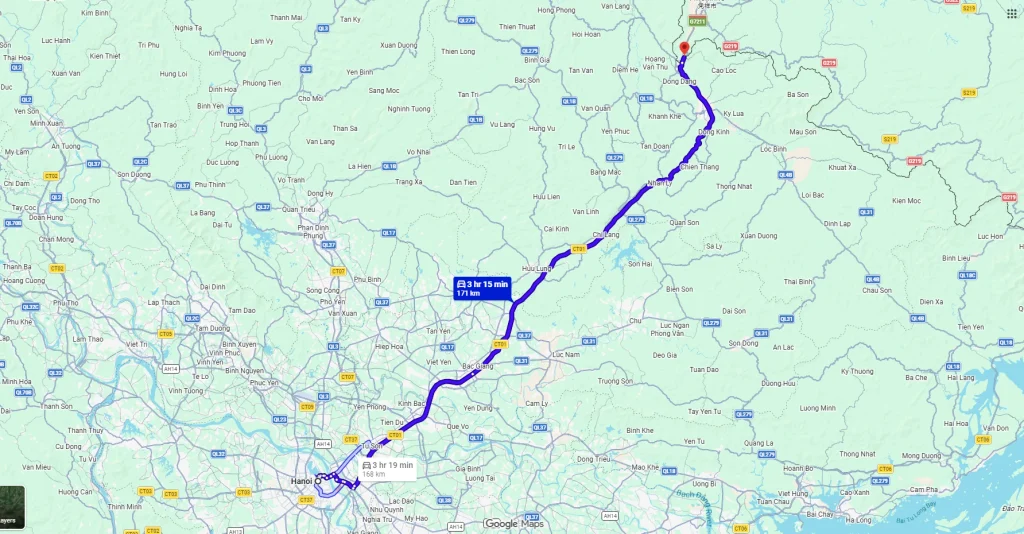
Youyiguan is one of the land ports in Pingxiang. The two gate names refer to opposite sides of the same international crossing, so you may see either name in travel instructions.
| Practical detail | What you need to know |
| Vietnamese gate | Huu Nghi International Border Gate |
| Chinese gate | Youyiguan, also called Friendship Pass |
| Location | Lang Son province, Vietnam, facing Pingxiang, Guangxi, China |
| Open to | International passenger travel, including foreign travelers meeting entry requirements, and commercial freight |
| Getting there | Road transport from Hanoi towards Lang Son and Dong Dang, continuing to the border |
| At the gate | Passenger inspection facilities, immigration and customs controls, alongside a busy trading border |
When arranging transport, name the border gate as your destination rather than just Lang Son. A journey ending in the city still leaves you needing onward transport, and the driving estimate doesn’t include border procedures.
Why choose the Huu Nghi border for a visa run from Hanoi?
Huu Nghi is worth considering if you’re based in Hanoi and want a road crossing within reach of a day trip. Its location makes an outward journey and return physically feasible in one day, provided your entry arrangements support that plan.
The practical advantage is keeping your journey focused on the border rather than adding airport transfers and a flight. You can leave your main luggage at your Hanoi accommodation and travel with what you need for the crossing, if your accommodation agrees.
International passenger access also matters: this route serves foreign travelers rather than only local border residents. Its inclusion in Vietnam’s e-visa checkpoint list, discussed in the next section, makes it relevant when you’re choosing a land route for your return.
A guided trip can suit you if you’d prefer coordinated transport to arranging separate journeys towards the border and back. Having a contact at the gate also gives you someone to ask about directions and meeting arrangements, especially if you’re unfamiliar with the crossing.
The route fits travelers who can spend a full day away from Hanoi and keep their evening flexible. It doesn’t suit a tightly timed onward connection, and a short road journey isn’t a reason to choose China if obtaining permission to enter would complicate your plans.Another border may suit you better if you’re already traveling elsewhere in Vietnam or have easier entry arrangements for another neighboring country. Use the route comparison in “Is Huu Nghi the right border for your run?” to weigh those alterna
Is Huu Nghi the right border for your run?
The Vietnam Government Portal’s checkpoint announcement lists Huu Nghi, Na Meo and Lao Bao as authorized e-visa checkpoints. Checkpoint authorization doesn’t make a used single-entry visa reusable.
| Route | What it involves | Who might consider it | Vietnam return arrangements |
|---|---|---|---|
| Huu Nghi, China | Road trip from Hanoi through Lang Son | Travelers eligible to enter China | Exemption or valid entry document |
| Moc Bai, Cambodia | Cambodia crossing usually approached from Ho Chi Minh City | Travelers based in southern Vietnam | Check requirements for the chosen route |
| Laos routes | Crossings including Na Meo and Lao Bao | Travelers considering Laos instead of China | Exemption or valid entry document |
| Lao Cai, China | An alternative northern China crossing | Travelers whose plans suit that route | Check requirements for the chosen route |
► Compare the Moc Bai visa run and visa run to Laos before choosing.
👉 Our Vietnam border-crossing guide gives broader route context.
Who can do a visa run through Huu Nghi?
All foreign travelers in Vietnam can consider a visa run through Huu Nghi if they can legally enter China and re-enter Vietnam. For China, you need a valid Chinese visa or eligibility for visa-free entry that applies at this land crossing and covers your travel purpose. Entry remains subject to Chinese border inspection.
For your return to Vietnam, you need valid entry permission, such as an appropriate visa or eligibility for visa exemption. Huu Nghi accepts Vietnam e-visas, but leaving Vietnam does not automatically grant you a new stay. If you need a new e-visa, applications are for foreigners outside Vietnam, so plan your application and return accordingly.
You need lawful departure from Vietnam, permission to enter China and eligibility to return to Vietnam. Resolve any overstay or exit restriction before attempting the trip.
► See more options for the Vietnam visa run. If you’re considering staying without crossing a border, compare a visa extension or visa run.
Return on a 45-day exemption
Vietnam’s government resolutions cover these groups, subject to entry conditions:
| Policy | Countries | Purpose and policy period |
|---|---|---|
| Resolution 44 | Germany, France, Italy, Spain, UK, Russia, Japan, South Korea, Denmark, Sweden, Norway and Finland | Regardless of entry purpose; 15 March 2025 to 14 March 2028 |
| Resolution 229 | Belgium, Bulgaria, Croatia, Czech Republic, Hungary, Luxembourg, Netherlands, Poland, Romania, Slovakia, Slovenia and Switzerland | Tourism; 15 August 2025 to 14 August 2028 |
A qualifying exemption avoids a visa application. It doesn’t remove the border checks.
Return on a new e-visa
Citizens of all countries and territories can apply for a Vietnam e-visa through the official e-visa portal. Another exemption, an existing multiple-entry visa or a qualifying residence document may also fit your circumstances.
China’s rules need a separate check. According to the Chinese Consulate-General in Vancouver’s official guidance, the following position applies as checked on 10 November 2026:
- Australian ordinary-passport holders may qualify for visa-free visits of up to 30 days for business, tourism, family visits, exchanges or transit, through 31 December 2026.
- Canadian ordinary-passport holders may qualify on the same terms.
- US and Indian ordinary-passport holders aren’t covered by that unilateral exemption and should arrange a Chinese visa unless another exemption applies.
That exemption can apply at road ports open to foreign nationals, but officers check your purpose and eligibility. A round trip from Vietnam into China and back doesn’t meet the third-country requirement for China’s visa-free transit schemes.
Stamp only or an e-visa: which should you choose?
Stamp-only suits travelers who qualify for exemption re-entry. If you aren’t exempt, an e-visa is one option alongside other qualifying entry documents.
| Point | Exemption entry | E-visa entry |
|---|---|---|
| Basis for return | Passport and exemption eligibility | Passport and issued e-visa |
| Visa application required? | No, if eligible | Yes |
| Stay | As permitted under the applicable exemption | Up to 90 days, single or multiple entry; use the dates granted |
| Immigration stamp | Records admission after checks | Records admission under the approved visa |
A pending application isn’t an issued visa. Without independent exemption eligibility or another valid entry document, you must wait for issuance before returning.
Successful applicants use their application code to retrieve and print the result. Our Vietnam e-visa guide explains the application, while our processing-time guide helps with planning.
What does the day look like, step by step?
You travel from Hanoi to Lang Son, complete departure and arrival procedures in both countries, then join the return transport once admitted to Vietnam. Keep each immigration stage separate: reaching the next checkpoint doesn’t mean you’ve completed its checks.
A typical day
These are typical itinerary times, not guaranteed departure or arrival commitments. All times below use Vietnam time; China is one hour ahead.
| Vietnam time | Planned stage |
|---|---|
| 05:00 | Pickup in Hanoi |
| 09:00 | Meet your guide at Huu Nghi and begin the border procedures |
| 14:00 | Planned Vietnam re-entry, subject to admission and any required approval |
| Around 18:00 | Return to Hanoi |
👉 Step 1: Get ready and join your pickup in Hanoi
Before leaving your accommodation, check the pickup message for your meeting location and contact person. Have your passport and travel documents in a small bag you can take through immigration, rather than luggage you’ll leave in the vehicle.
At the meeting point, identify yourself to the driver and confirm you’re joining the Huu Nghi trip. The road journey takes you towards Lang Son and the border; use it to organise your papers in the order you’ll need them.
Tip: Save the pickup instructions offline so you can find the meeting point without mobile data.
👉 Step 2: Arrive at Huu Nghi and meet your guide
At the gate, make contact with your guide before heading towards immigration. Ask them to explain where you should go first, how to stay in contact during checks and where to regroup afterwards.
Tell the guide whether you’ll return under an exemption or need the new e-visa arranged through Package 2. Have the relevant documents accessible so any uncertainty about your return route can be raised before Vietnam departure.
Tip: If you lose sight of the group, contact the guide instead of following other travelers whose procedures may differ.
👉 Step 3: Complete Vietnam exit inspection
Present your passport for Vietnam exit inspection, with your current visa or residence evidence available if requested. Let the officer finish checking your documents and answer any questions about your stay or departure directly.
When your passport is returned, locate the departure record before moving on. If anything is unclear, ask for clarification while you’re still at this stage, with the guide helping you communicate where permitted.
For Package 2, this completed departure comes before the team’s e-visa submission. Ask how you’ll receive application updates while you’re across the border.
Tip: Keep the page containing your departure record easy to find for subsequent checks.
👉 Step 4: Enter China, then complete Chinese departure procedures
On the Chinese side at Youyiguan, present your passport and the visa or other permission supporting your entry, where required. Chinese inspection covers admission to China itself, so explain your actual travel plans honestly if questioned.
Have your arrival card information ready unless you qualify for an exception. If you haven’t completed it beforehand, official guidance allows completion on arrival using checkpoint digital options or a paper card; ask which option to use. Follow the Chinese Embassy’s arrival-card guidance rather than an unofficial paid form.
Once admitted, confirm the return arrangements with your guide before going elsewhere. Don’t assume you can simply turn around without Chinese departure inspection.
To leave China, present your passport again and complete the procedures officers require. China’s entry and exit law requires inspection and permission at both stages.
Tip: Put your phone away in controlled areas; take photographs only where explicitly allowed.
👉 Step 5: Return to Vietnam on the correct basis
Before proceeding through Chinese departure, confirm that your Vietnam return documents are ready. The exemption and e-visa options covered above require different evidence at Vietnam inspection.
If you’re returning under an exemption, present your passport and explain that you’re seeking exemption entry. Provide supporting information requested by the officer rather than assuming your earlier Vietnam stay establishes eligibility.
If you’re returning on a new e-visa, have the issued document ready for inspection alongside your passport. For Package 2, ask the team to confirm issuance and how you’ll obtain the required printout before approaching Vietnam entry control.
If issuance is still outstanding, remain in contact with the team about your next arrangements. The application acknowledgement can’t serve as your entry document, and neither the guide nor the planned vehicle departure can secure approval. Admission remains the inspecting authority’s decision.
Tip: Resolve any uncertainty about the issued document before starting the return crossing.
👉 Step 6: Check your admission record and travel home
After Vietnam immigration returns your passport, find the new stamp and check the admission date and permitted-stay end date. If a mark is unclear or appears inconsistent with your entry permission, raise it with the officer before leaving immigration.
Then contact your guide and confirm where to board the Hanoi-bound vehicle. Keep your passport accessible until all border checks are finished.
Tip: Once outside controlled areas, save a clear photograph of the new admission record for your own reference.
Tips for a smooth day
- Wear comfortable clothes and shoes suitable for travel and standing.
- Carry drinking water and a small snack.
- Keep paper copies and offline document backups separate from the originals.
- Charge your phone and bring a power bank; save the guide’s number offline.
- Keep your passport on your person except during checks by an identified official.
- Decline unexplained “helper” fees; request a receipt for official charges.
What should you prepare?
Prepare your passport, evidence supporting your return and any documents needed for China. Keep your guide’s contact details available.
- For unilateral visa-exempt Vietnam entry, your passport needs at least six months’ validity.
- A Vietnam visa must expire sufficiently before your passport or travel document expires to meet the required validity margin.
- E-visa applications require personal details, a photograph and the passport identity page.
- Carry the approved printout when traveling on an e-visa.
- Bring money for meals and local expenses.
Chinese embassy guidance requires an arrival card unless an exemption applies. Complete it through the official online service before travel, or use the available checkpoint options; a guided booking alone doesn’t establish an exemption.
Keep application information consistent with your passport. If payment fails, use our e-visa payment troubleshooting guide before making repeated attempts.
What does it cost in total?
Your total depends on the package, your visa requirements and personal spending. Our current trip price is available on request.
| Cost item | Who charges it | What to budget for |
|---|---|---|
| Vietnam government visa fee | Vietnamese government | Standard rates: US$25 single entry, or US$50 multiple entry within the validity limit described above |
| Child’s government visa fee | Vietnamese government | The schedule separately sets US$25 for visas issued to children under 14, irrespective of duration |
| Trip package | Vietnam-visa.com | Request a current quote |
| Chinese visa, if required | Relevant Chinese visa authority | Check the applicable application charges |
| Personal and local expenses | Relevant providers | Meals, sightseeing, local transport and any additional receipted charges |
The Vietnam Government Portal’s fee schedule supplies the government rates. Our Vietnam visa fees page explains service charges.
The trip excludes both countries’ visa fees, meals, sightseeing, transport inside the Chinese border town and any border charges payable on receipt. Ask for an itemized explanation of additional charges; don’t treat them as an automatic extra e-visa stamping fee.
What mistakes should you avoid?
Check your visa details before traveling, and keep control of your passport. Our common e-visa mistakes guide explains application errors that can disrupt travel.
- Check your name, passport number, validity dates and entry type.
- Hand your passport over only for a clearly explained procedure to an identified official or verified representative.
- Don’t assume previous admission guarantees the next entry.
Officers decide admission even when you hold a visa. Consecutive visits must each meet the applicable conditions.
How does Vietnam-visa.com organise your visa run?
We organise guided road trips from Hanoi, with assistance for exit and re-entry procedures at the gate. The available options are:
| Option | Service scope |
|---|---|
| Package 1 | Round-trip transport and assistance with immigration stamping for exemption re-entry |
| Package 2 | Package 1 plus a single-entry e-visa application submitted after Vietnam exit, subject to approval |
📋 Before booking, we check nationality, China entry requirements, passport validity and current Vietnam immigration status. If you need a Chinese visa, contact us well before departure to check the application requirements.
Vietnam-visa.com has served 300,000+ clients across its visa services. We’ll explain whether this route fits your case.
📩 Want to compare packages, check dates or request a quote? Message us on Hotline/WhatsApp (US)+1.341.999.4099 | (VN)+84.387.285.099 or email [email protected].
Frequently Asked Questions
Usually, yes: these passports aren't on the two general 45-day exemption lists. You may have another exemption or a qualifying existing visa or residence document, so check your individual circumstances.
We plan the route as a day trip, but a newly required e-visa must be approved before re-entry. The standard response period starts after complete information and payment are received, so same-day approval and return aren't promised.
We submit the e-visa application after you exit Vietnam. That's the package sequence, and approval remains the immigration authority's decision.
Contact our team straight away for help rather than attempting to cross on the application receipt.
Yes. Huu Nghi is an authorized e-visa checkpoint. Before departure, check your approved visa and the official application instructions for any port restriction affecting your entry.
If China refuses admission, the planned crossing cannot proceed. Pre-booking checks help assess eligibility, but they don't guarantee admission or automatic return to Vietnam.
No. A visa run involves leaving Vietnam and seeking a new entry, while an extension concerns permission to remain without leaving.
📩 Need help checking your case? We offer 24/7 support. Message us on WhatsApp or email [email protected].



Contact Information