

 (VN)+84.387.285.099
 m.me/VietnamVisaservice
 Vietnamvisa
 Vietnamvisa



Your stay in Vietnam is running out, and you’re considering a short trip to China. It can work if you qualify to enter China and return to Vietnam. This guide compares Lao Cai, Mong Cai and Huu Nghi so you can choose a crossing and prepare.
Key Takeaways
- Australian and Canadian ordinary-passport holders have a 30-day China exemption, published through 31 December 2026, for qualifying purposes.
- US and Indian travelers generally need a Chinese visa unless another exemption or qualifying document applies.
- China’s 240-hour transit rule doesn’t cover a Vietnam-China-Vietnam turnaround.
- Officers on both sides decide admission, so carry genuine supporting documents.
Vietnam-visa.com has helped travelers with Vietnam entry paperwork since 2007.
📩 Want the current price for your dates? Message us on Hotline/WhatsApp (US)+1.341.999.4099 | (VN)+84.387.285.099 or email [email protected], and we’ll check your case.
Can you do a visa run to China?
A visa run is an exit-and-return trip, not an entry entitlement or an extension of your current permission. Your purpose and documents must meet each country’s requirements.
Our visa run guide explains how this differs from extending your stay inside Vietnam.
Which passports can enter China without a visa?
According to the Chinese Embassy’s exemption FAQ, Australian and Canadian ordinary-passport holders qualify for 30 days, through 31 December 2026, for permitted purposes. US and Indian ordinary passports aren’t on the published unilateral exemption list.
| Passport or traveler category | Usual entry route | Check first |
|---|---|---|
| USA | Chinese visa | Whether another exemption or document applies |
| Australia | Unilateral exemption | Purpose and travel dates |
| Canada | Unilateral exemption | Purpose and travel dates |
| India | Chinese visa | Whether another exemption or document applies |
| Taiwan | Mainland entry permit for Taiwan residents | Permit eligibility and issuing port |
| Hong Kong | Depends on nationality and travel document | Relevant mainland-entry entitlement |
The exemption applies at land ports open to foreigners, subject to stated exceptions. You need an ordinary passport valid for the trip; temporary and emergency travel documents don’t qualify.
China’s National Immigration Administration requires onward travel to a third country or region under its 240-hour transit scheme. Returning directly to Vietnam fails that condition.
Taiwan residents need the appropriate mainland-entry permit. Youyiguan, Dongxing and Hekou highway ports are listed among ports issuing single-entry permits, but eligibility and issuance depend on the applicant.
Eligible non-Chinese Hong Kong permanent residents can apply for a Mainland Travel Permit, a mainland-entry document valid for five years, allowing multiple visits subject to its permitted-stay limit. Hong Kong residence alone doesn’t establish eligibility; other document categories need individual checks.
If you need a Chinese arrival card, you can complete it online before travel, selecting your actual Chinese arrival port. Arrival-site alternatives remain available.
What do you need to get back into Vietnam?
Common return options include visa-exempt entry, an approved new e-visa, or an existing visa that permits another entry. Other qualifying visas and residence documents may also apply.
Check these details before arranging transport:
- Passport: Vietnam’s unilateral visa-exemption route requires at least six months’ validity.
- Current stay: Check your permitted-stay expiry so you can leave lawfully.
- New e-visa: The standard personal application is for foreigners outside Vietnam. An application alone doesn’t authorize return.
- Existing e-visa: Check its dates and remaining entries. An already-used single-entry visa can’t support another entry.
- Application documents: Prepare your personal details, photograph and passport biographical page. Keep the application code to check and print the approved result.
- Crossing: For trips arranged through us, we require the entry port declared in your e-visa application to match your planned crossing.
Our guide to common e-visa mistakes covers details worth checking before submission.
💬 Not sure your details are right? Message us on Hotline/WhatsApp (US)+1.341.999.4099 | (VN)+84.387.285.099 or email [email protected] and we’ll check your case.
Which crossing should you choose?
Choose by your starting point and available transport. The Vietnam Government’s e-visa guidance lists all three as authorized e-visa land checkpoints.
| Vietnam crossing | China side | Practical starting area | Confirm before booking |
|---|---|---|---|
| Huu Nghi, Lang Son | Youyiguan | Hanoi | Final transfer and return pickup |
| Lao Cai | Hekou | Sapa or Lao Cai | Road access or train boarding arrangements |
| Mong Cai | Dongxing | Ha Long or Quang Ninh | Pedestrian arrangements and town access |
Our Vietnam border crossings guide covers other entry points.
How does each crossing work, and what happens on the day?
The trip involves four immigration stages, with local walking or transfer arrangements between them. Confirm where your driver stops and where your next transfer begins.
- Complete Vietnam exit checks.
- Complete Chinese entry checks.
- Complete Chinese exit checks.
- Complete Vietnam re-entry checks.
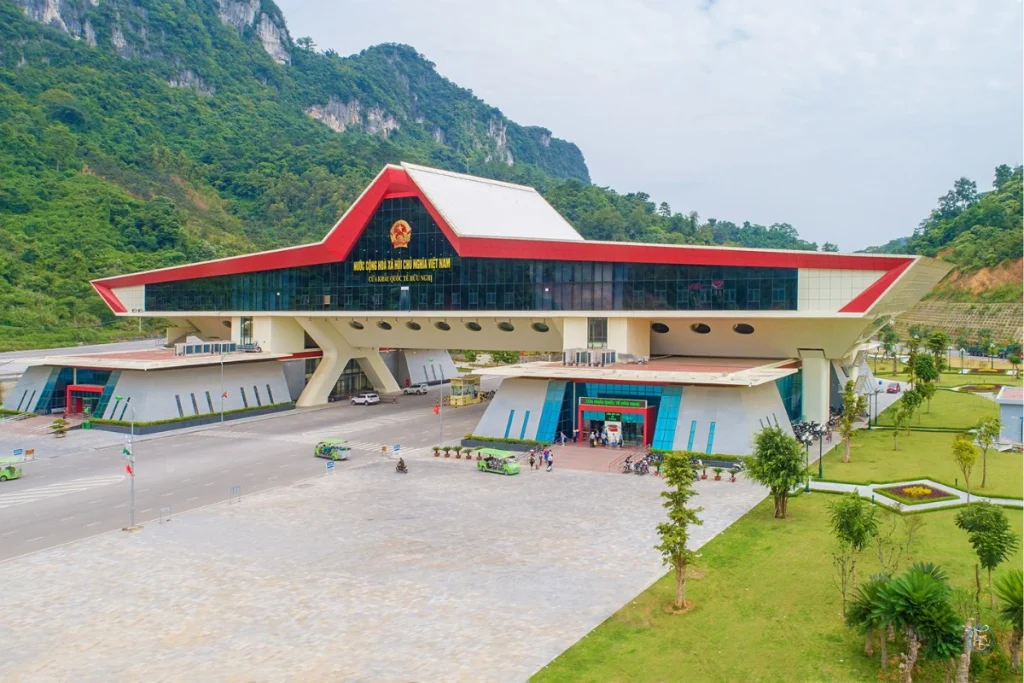
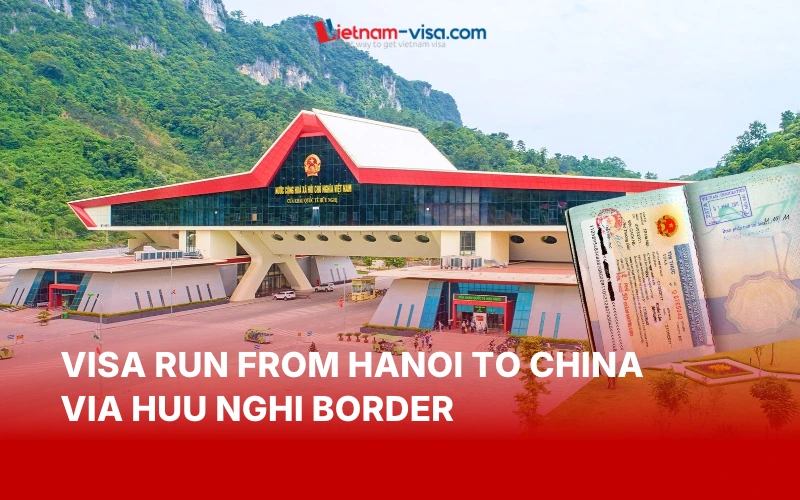
Huu Nghi-Youyiguan (Lang Son)
Huu Nghi is the practical road option to consider from Hanoi. Confirm the final transfer to the checkpoint and save your return meeting point before leaving the vehicle.
👉 Check our detailed guide: Hanoi Visa Run via Huu Nghi Border
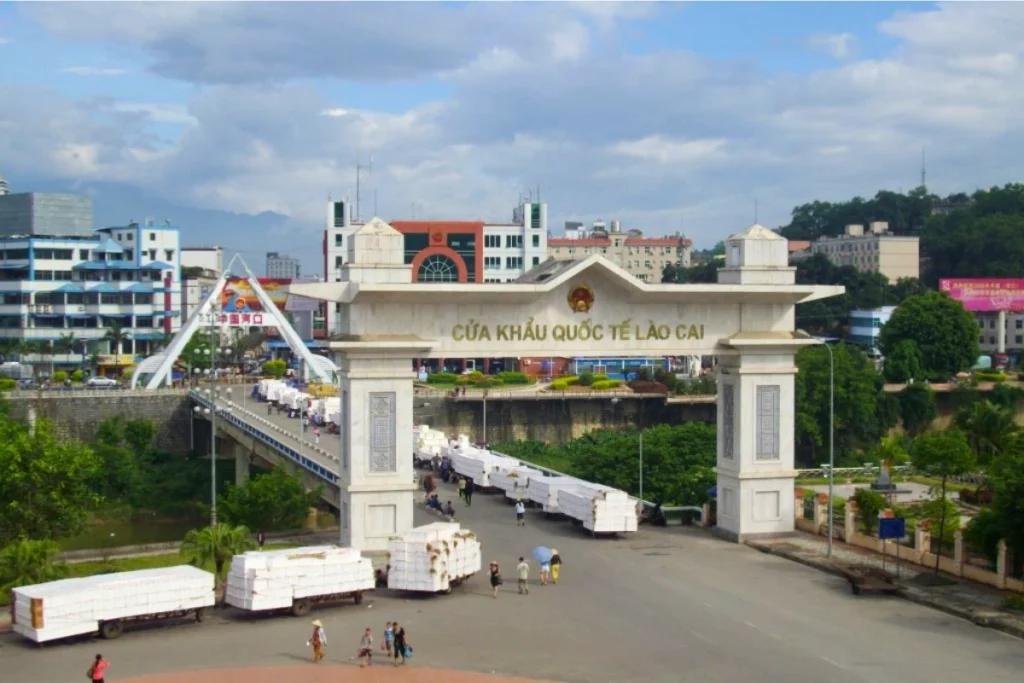
Lao Cai-Hekou
Lao Cai is worth considering if you’re already in Sapa or Lao Cai. Before booking a train, ask the operator whether your passport is accepted and where you’ll complete border formalities.
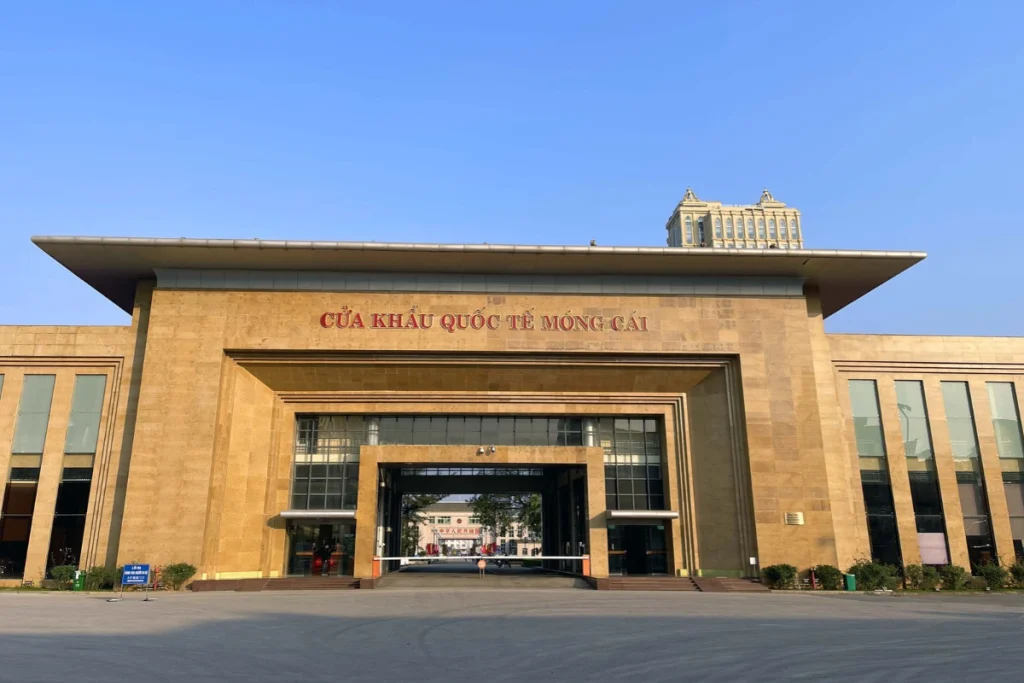
Mong Cai-Dongxing
Mong Cai is an option for travelers based in Ha Long or elsewhere in Quang Ninh. Arrange outward and return transport, and check how you’ll travel beyond the checkpoint.
Where the waiting comes from
Allow for outbound travel, local transfers, immigration queues and return transport. An after-exit application adds approval waiting; visa-exempt travelers don’t need an e-visa decision but still undergo admission checks.
What to prepare before departure
Prepare your documents and return arrangements before paying for the trip. Use the eligibility checks above to build your departure checklist.
- Keep printed and offline copies of your travel documents.
- Begin arranging any required Chinese visa well before departure.
- Save pickup locations and your organizer’s contact details.
- Confirm current border opening hours and local transport.
- Carry a pen, cash for meals and expenses, and a backup communication method for China.
- Check booking time zones: China is one hour ahead of Vietnam.
Stamp only or an e-visa when you return?
A stamp run means returning under an applicable visa exemption. Vietnam e-visas can be issued for up to 90 days, with single or multiple entry; use the dates actually granted.
| Return option | Suits | Main check |
|---|---|---|
| Visa exemption | Travelers qualifying for that exemption | Applicable entry conditions |
| New e-visa after exit | Travelers needing a new visa | Approved result before return |
| Existing e-visa | Holders with an unused permitted entry | Validity and entries remaining |
Article 16a of Vietnam’s immigration law sets a response period of three working days after sufficient information and the fee are received. That isn’t a guarantee of approval; our e-visa processing guide explains planning around a pending application.
If leaving doesn’t suit your situation, compare visa extension and a border run. Extension eligibility depends on your case.
📝 Prefer not to fill in the form yourself? See how our team can support your Vietnam e-visa application.
How much does a visa run to China cost?
Budget for transport, applicable Chinese and Vietnamese visa fees, private assistance and meals. Chinese visa fees vary by nationality, so check your applicable fee before booking.
| Vietnam e-visa government application | Fee |
|---|---|
| Single entry | US$25 |
| Multiple entry | US$50 |
The government application fee isn’t refunded if the visa isn’t granted. Ask for an itemized explanation and receipt for any additional border-related charge.
Private assistance is separate; our urgent visa service page explains support options if your departure is approaching.
💰 Want to see our fees before you apply? See our current visa fees.
What are the risks, and what should you settle before booking?
The main risks are refused admission and delayed approval. Previous admission doesn’t guarantee another entry, and a day-trip booking doesn’t ensure same-day return.
Ask your organizer:
- Where can I wait if approval is delayed?
- Who arranges accommodation, and who pays?
- What happens if return transport changes?
- Which extra expenses could arise?
- Who can I reach during the trip?
Don’t leave planning until your last permitted day. If China doesn’t fit your documents or route, compare Laos and Moc Bai.
How does Vietnam-visa.com help?
We organize guided road trips from Hanoi to Huu Nghi, with eligibility checks before booking and a guide helping with exit and re-entry procedures. We don’t operate trips from Lao Cai or Mong Cai.
Our team has assisted 300,000+ clients. These are the available package options:
| Package | Included | Intended traveler |
|---|---|---|
| Package 1 | Transport and help with immigration stamping | Eligible visa-exempt return |
| Package 2 | Package 1 plus an after-exit single-entry e-visa application | Return requiring a new visa |
💬 Package 2 remains subject to the approved validity and decision. Contact us to discuss next steps if the result is delayed.
💬 Both packages exclude Vietnam and China visa fees, meals, sightseeing, transport inside the Chinese border town and separately charged border expenses. Contact us for current prices and available dates.
💬 Tell us your nationality, current stay expiry and travel plans on Hotline/WhatsApp (US)+1.341.999.4099 | (VN)+84.387.285.099 or email [email protected]. We offer 24/7 support.
Frequently Asked Questions
Yes, if you qualify to enter China and return to Vietnam. Each country assesses admission separately.
US and Indian ordinary-passport holders generally need a Chinese visa for a tourist turnaround. A separate exemption or qualifying travel document may change that requirement.
Australian and Canadian ordinary-passport holders can use the 30-day exemption for qualifying purposes through 31 December 2026. Check that your intended visit meets the conditions.
You can't use it for a Vietnam-China-Vietnam turnaround. The scheme requires onward travel to a third country or region.
The standard personal e-visa application is for foreigners outside Vietnam. Plan your departure and waiting arrangements around that requirement.
No, it's the statutory response period after sufficient information and payment are received. It doesn't guarantee approval or a particular return date.



Contact Information