

 (VN)+84.387.285.099
 m.me/VietnamVisaservice
 Vietnamvisa
 Vietnamvisa



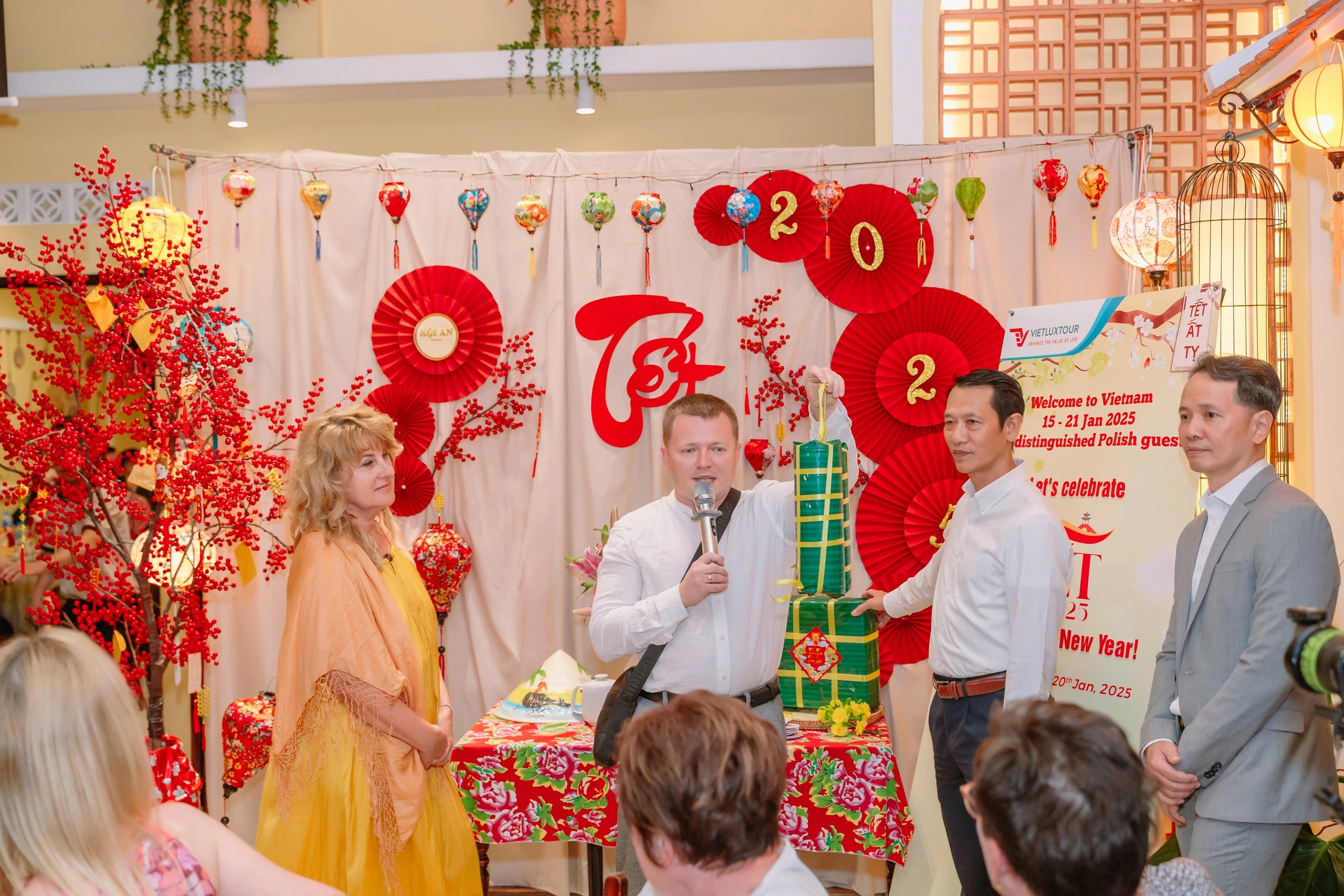
Vietnamese New Year traditions center on Tết Nguyên Đán, usually called Tet, a family celebration of renewal and respect for ancestors. Vietnamese New Year customs include sharing food, exchanging greetings and giving lucky money, with each household celebrating in its own way. This guide covers the traditions and guest etiquette; find the calendar on our Tet dates and closures page.
Key Takeaways
- Confirm your invitation and arrival time, and follow your host’s lead.
- There’s no single amount you need to give as lì xì. A host or local friend can suggest what’s appropriate.
- Bánh chưng is associated with the North and bánh tét with the South.
- Tet falls on the first day of the first lunar month, so its Gregorian date changes each year.
- Some beliefs belong to particular communities or families rather than to everyone in Vietnam.
Vietnam-visa.com has served 300,000+ clients since 2007.
What are Tet traditions, and what do they mean?
Tet is Vietnam’s lunar new year and a time for family reunion, remembrance and a fresh start. Its meaning is shared through visits, meals and customs that bring generations together.
What does Tet mean to families?
For many families, Tet is a chance to reunite. Relatives travel home, spend time together and exchange wishes for the year ahead.
Remembering ancestors is another part of the holiday. Some households make offerings or tend family graves as an expression of respect.
The change of year also represents a new beginning. A prepared home, festive clothes and good wishes can express hope for a fortunate year.
Where does Tet come from?
Tet has a long history, but no firm date for its origin has been established. The Vietnam Government Portal’s account of Tet discusses its meaning without settling on an exact beginning.
What should you do when a family invites you to Tet?
Good Tet etiquette for foreigners starts with a conversation about the visit. Your host can tell you what suits their household, and you can take your cues from the family once you arrive.
Checklist for your first Tet visit
- Confirm the invitation and ask what time to arrive.
- Ask whether you should bring anything.
- Greet your host and the elders, and offer a New Year wish.
- Follow the family’s lead on where to sit, eat and join in.
- Ask how long the visit is likely to last.
Before or after midnight?
Many households observe the turn of the year at midnight. Your invitation might be for that gathering or for a visit later, so check the time before making plans.
Gifts and clothing
A small gift, such as a cake, fruit or sweets, can be suitable if your host welcomes it. A local friend can help you choose if you’re unsure.
Neat clothes are a safe choice. If you’d like to wear an áo dài, Vietnam’s traditional long tunic, check whether your host thinks it suits the occasion.
What if you could be the first visitor?
Some households pay attention to their first guest of the year. Let the family know when you plan to arrive and check whether they have a preference.
How does lì xì (lucky money) work for visitors?
Lì xì is lucky money given in a red envelope as a New Year wish. Children often receive new money, while younger relatives offer good wishes to elders and may receive envelopes from adults.
Who gives and who receives?
The pattern varies between families. Watch what your hosts do rather than assuming every household follows the same arrangement.
How much should you give?
There’s no single prescribed amount for a visitor. Ask your host or a local friend what would feel appropriate for the people you plan to include.
Envelope or tip?
Use a red envelope for a New Year gift rather than handing over loose cash. It presents the money as a wish for luck, not a tip.
Several people to thank
If you’d like to thank people such as a cleaner or security guard, a trusted local can suggest whom to include. Keep gifts modest and consistent across people in similar roles.
Receiving lì xì
Accept an envelope with a smile and a thank-you. What you do with the money afterwards is your choice.
How do you say Happy New Year in Vietnamese?
The most useful of the Vietnamese New Year greetings is “Chúc mừng năm mới,” which means “Happy New Year.” Offering New Year wishes, or chúc Tết, and mừng tuổi are traditional practices during family visits.
| Phrase | Meaning | Say it like | When to use |
|---|---|---|---|
| Chúc mừng năm mới | Happy New Year | chook moong nam moy | To greet a host, friend or neighbor |
| Chúc Tết | Offering New Year wishes | chook tet | When describing a New Year visit or greeting |
| Mừng tuổi | Offering good wishes for the new age | moong twoy | In the context of family New Year wishes |
What do Vietnamese families eat at Tet?
Vietnamese Tet food includes rice cakes, meat dishes, sticky rice and pickles. The menu depends on the family and region, so you won’t necessarily find every dish at one meal.
| Dish | What to expect |
|---|---|
| Bánh chưng and bánh tét | Leaf-wrapped glutinous rice cakes |
| Gà luộc | Boiled chicken |
| Thịt kho trứng | Pork braised with eggs |
| Xôi gấc | Sticky rice colored with gấc fruit |
| Nem rán | Fried spring rolls |
| Giò lụa | Vietnamese pork sausage |
| Dưa hành | Pickled onions |
Bánh chưng and bánh tét
Wrapping bánh chưng and bánh tét is a Tet preparation for some families. A traditional recipe described by the Vietnam Government Portal uses glutinous rice, mung beans and pork belly, though recipes vary.
Boiled chicken
Gà luộc is boiled chicken served as part of a larger Tet meal. Your host may place it alongside several other dishes for everyone to share.
Thịt kho trứng
Thịt kho trứng is pork braised with eggs. It’s a home-style dish that can appear on the holiday table.
Xôi gấc
Xôi gấc is sticky rice colored red with gấc fruit. It appears in accounts of traditional Hanoi year-end meals.
Fried spring rolls
Fried spring rolls, called nem rán, are another dish mentioned in Hanoi year-end meals. Fillings can differ from one household to another.
Giò lụa
Giò lụa is Vietnamese pork sausage. It’s often sliced and shared with the other dishes.
Pickled onions
Dưa hành are pickled onions served as a side dish. Their sharp flavor can balance richer foods on the table.
When does Tet start?
Tet begins on the first day of the first lunar month. The traditional calendar follows lunar cycles and also accounts for the seasons, so the corresponding Gregorian date moves. You can find year-specific dates on our Tet dates and closures page.
Vietnam’s Labor Code provides five paid Lunar New Year holiday days for covered employees. An individual’s break can differ from that statutory allowance.
How do families prepare before Tet?
Preparations can include honoring ancestors, tidying the home and arranging seasonal decorations. The practices below are common examples, though households choose their own order and activities.
Kitchen Gods farewell
A traditional farewell for the Kitchen Gods takes place on the 23rd day of the last lunar month. The date is in the lunar calendar, not a fixed Gregorian date.
Visiting ancestors’ graves
Some households visit and tend their ancestors’ graves before the holiday. For them, the visit is a way to remember family members who have died.
Cleaning the house
Families may clean their homes as part of getting ready for the new year. The work is done before the celebrations begin.
Decorating the house
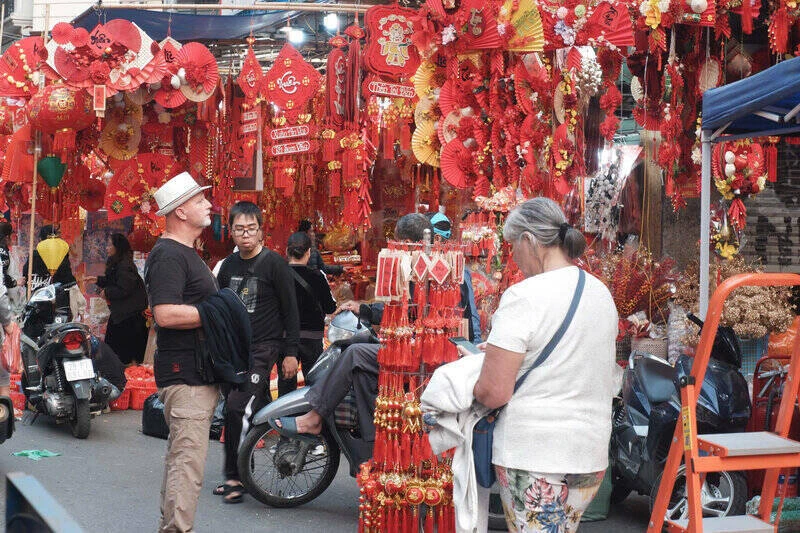
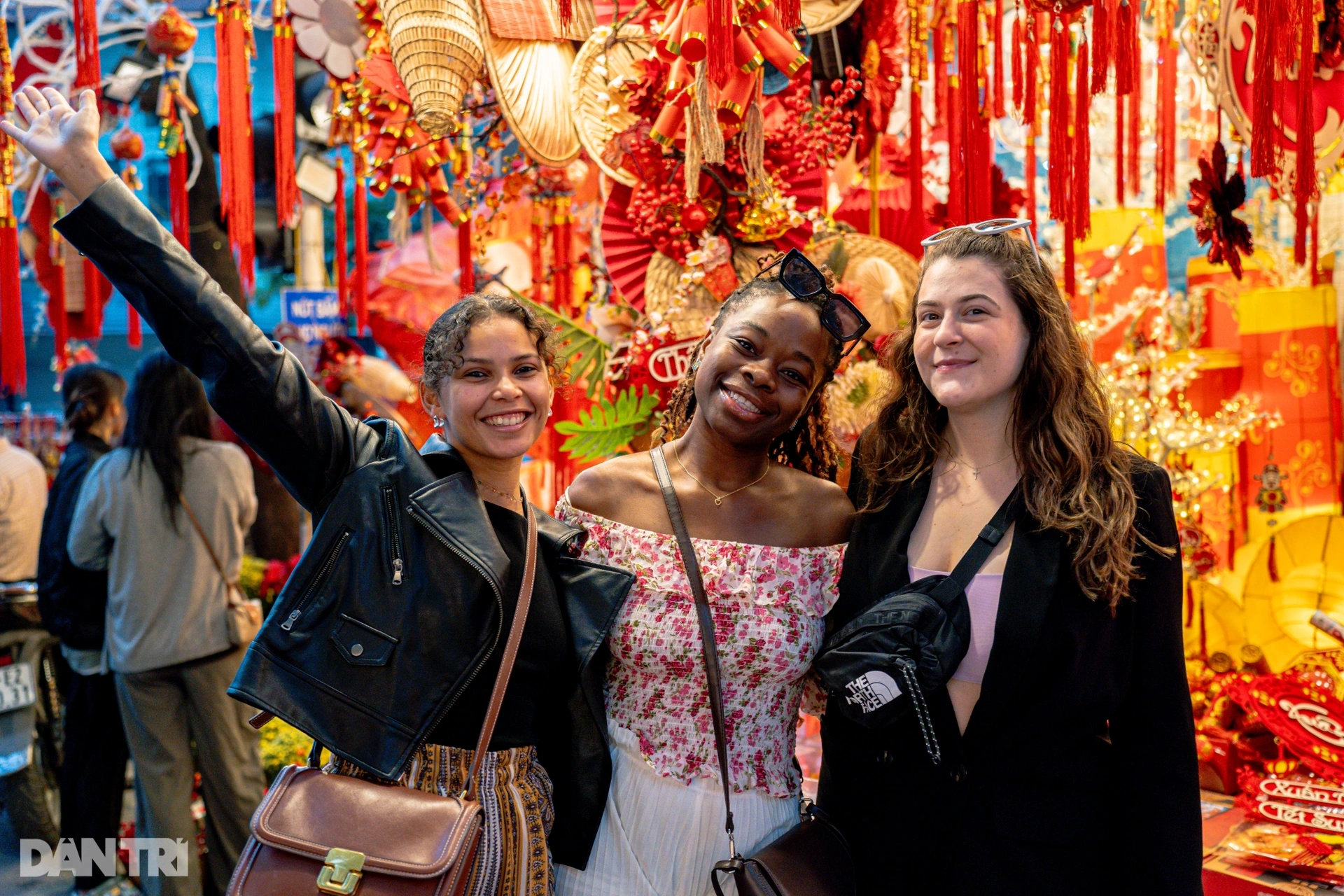
Decorations give the home a festive setting for family gatherings and visitors. What goes on display depends on the household.
Tet flowers
Peach blossoms, mai flowers and kumquat trees are among the plants associated with Tet. The regional table below shows where some are especially familiar.
The five-fruit tray
A mâm ngũ quả, or five-fruit tray, is a Tet decoration and offering in many homes. The selection of fruit varies between families.
New clothes
Some people wear new clothes for New Year family greetings. It’s a custom you may see, not something a guest must do.
What happens on New Year’s Eve and in the first days?
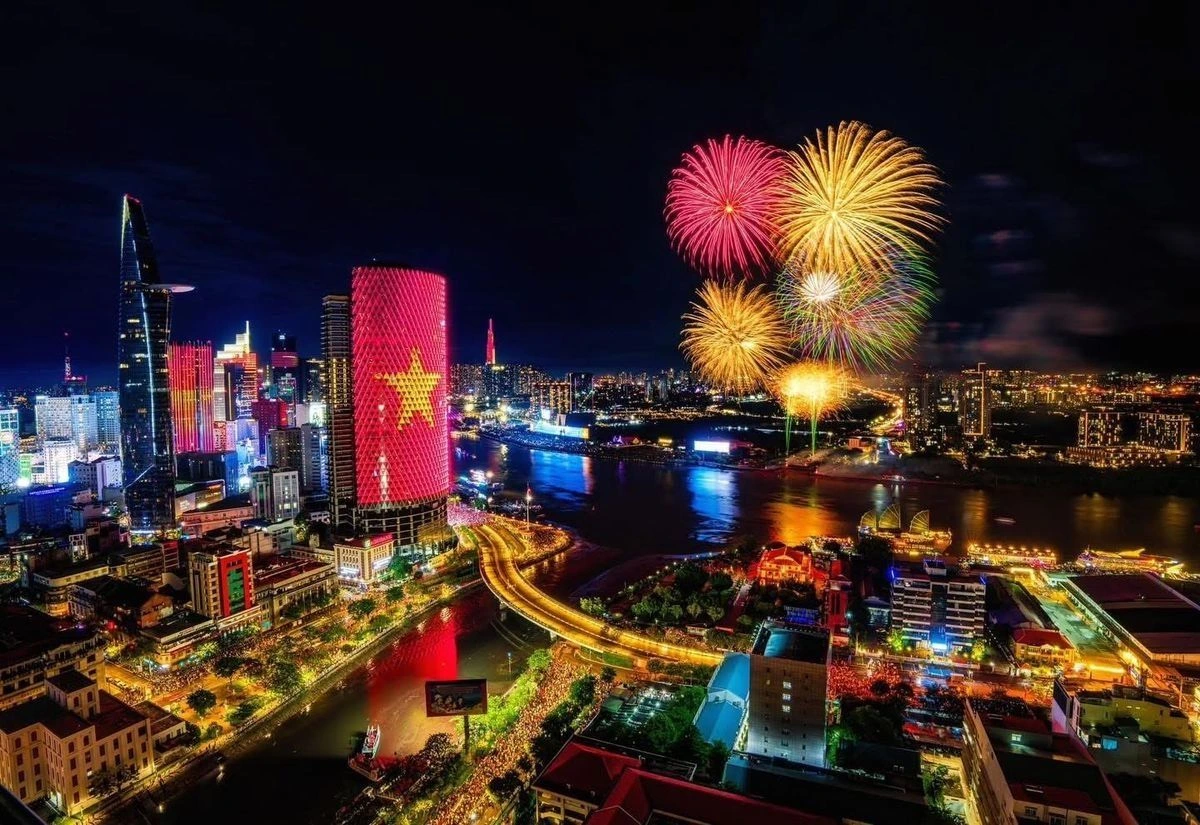
The holiday moves from tất niên, the year-end period, through giao thừa, New Year’s Eve, into tân niên, the new-year period. Families choose which observances to follow.
The year-end family meal
A year-end meal brings relatives together before the old year ends. For some, it’s a chance to share a table with family members who live elsewhere.
Midnight offerings
At the turn of the year, some households hold a ceremony and make offerings to their ancestors. If you’re invited to join, follow the family’s lead.
First-footing (xông đất)
Xông đất means first-footing, the custom concerning the first person to visit a household in the new year. Some families believe that visitor influences the household’s fortune; others may not observe the custom.
Who do families visit first?
Families decide their own visiting order. You may hear different sayings about relatives and teachers, but there’s no single sequence every household follows.
How do pagoda visits, couplets and lucky buds fit into Tet?
Pagoda visits, calligraphy and a first outing are ways some people mark the new year. Participation depends on family and belief.
Pagoda visits
Some people visit a pagoda to make wishes for the year ahead. You can visit respectfully without taking part in a ritual.
Couplets and calligraphy
Câu đối are calligraphic couplets carrying good wishes. People may ask for them or display them during Tet.
First outing and picking lucky buds
Xuất hành is an auspicious first outing of the year. Hái lộc means picking lucky buds, another custom observed by some families.
Which Tet beliefs should visitors treat with care?
Treat a belief you encounter as belonging to the family or community that observes it. Vietnamese New Year customs can differ by region, religion and local practice.
For example, an account of a Mông community describes a belief against sweeping on the first day. That local practice shouldn’t be assumed to apply to every Vietnamese household.
How do Tet customs differ between North and South?
Some Tet foods and decorations have regional associations, though families across Vietnam can enjoy them. The table describes familiar links, not exclusive rules.
| Item | North | South | What to know |
|---|---|---|---|
| Rice cake | Square bánh chưng | Cylindrical bánh tét | Both are traditional Tet foods |
| Blossom | Peach blossom | Yellow mai | Yellow mai is popular in Ho Chi Minh City |
| Tree | Kumquat | Kumquat can also be seen | Kumquat is associated with northern decoration |
Which Tet words should you know?
These terms can help you follow a conversation about Tet and recognize the customs around you.
| Term | Plain meaning |
|---|---|
| Tết Nguyên Đán | Vietnamese Lunar New Year |
| Tất niên | The year-end period |
| Giao thừa | New Year’s Eve |
| Tân niên | The new-year period |
| Xông đất | First-footing |
| Lì xì | Lucky money in an envelope |
| Mâm ngũ quả | Five-fruit tray |
| Câu đối | Calligraphic couplets with good wishes |
Should you travel to Vietnam during Tet?
Tet can be a rewarding time to visit if you’d enjoy seeing the holiday and don’t mind adjusting your plans. Check arrangements with each provider before booking.
Is Tet a good time to visit?
You may enjoy the decorations and the chance to experience family celebrations if you’re invited. If you prefer a trip with predictable opening hours, consider how holiday closures could affect your plans.
Check your passport and visa
Check that your passport is valid and whether you need a visa for your nationality and trip. Vietnam offers eVisas to citizens of all countries and territories, but an application remains subject to the authority’s decision.
Our Vietnam eVisa service explains how we can support your application, and you can check our visa fees before deciding. We support applications on weekends and public holidays; the immigration authority issues results under a statutory period counted in working days.
💬 Flying soon? See our urgent visa options, or message us on WhatsApp or at [email protected] so we can check your case. We offer 24/7 support.
Help on arrival
Our arrival assistance can provide guidance through the airport steps included in your chosen package. It doesn’t replace a visa or guarantee admission.
What should you check before booking during Tet?
Check availability, opening hours and any holiday charges directly with the provider. Arrangements can vary between businesses and locations.
Flights
Ask your airline about seats and the change rules for your route before you buy. Check the schedule again before departure.
Trains and buses
Contact the operator for its holiday timetable and ticket availability. Book once your travel plans are settled.
Taxis
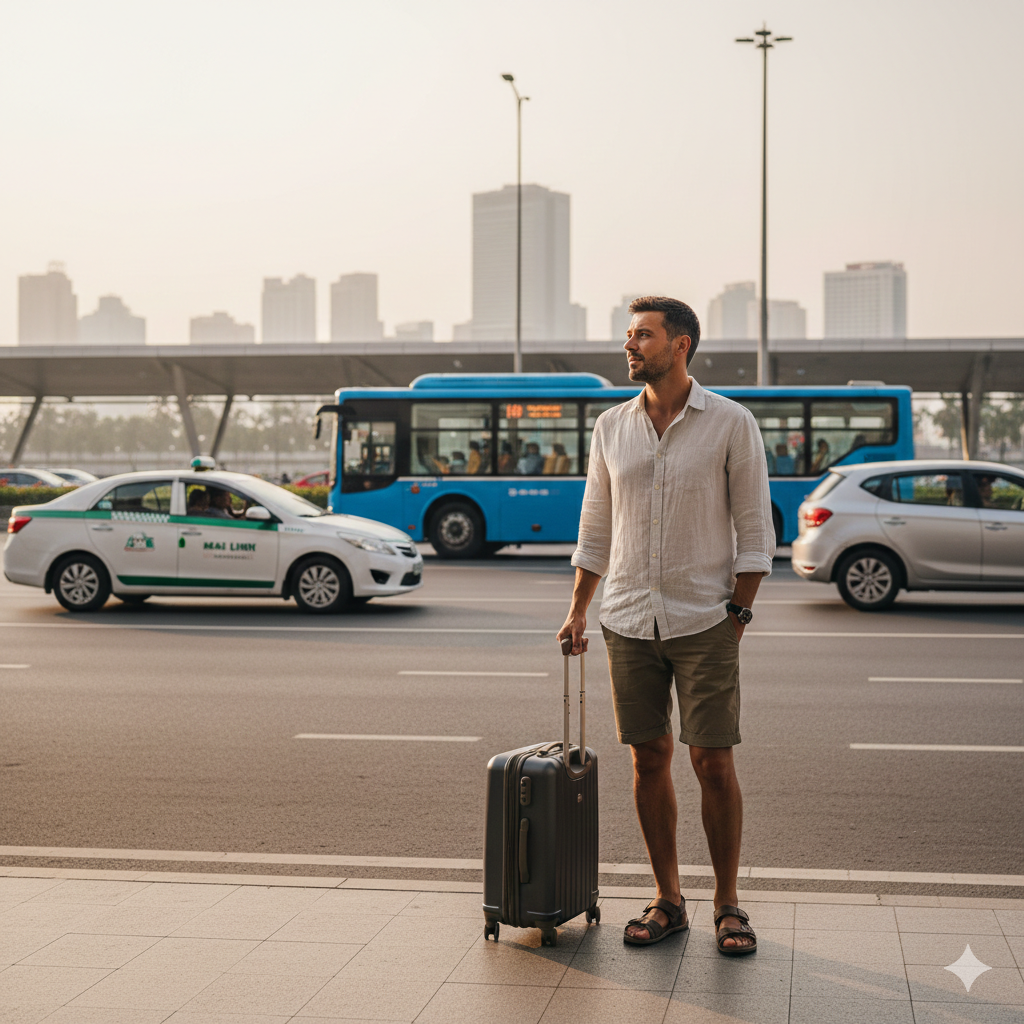
Ask your hotel or transport provider how the service operates during the holiday. Confirm the fare or how it will be calculated before setting off.
Accommodation
Confirm your reservation and check-in arrangements with the property. Ask about any holiday surcharge before paying.
Restaurants and shops
Opening hours can vary. Check directly before relying on a particular place for a meal or purchase.
Banks and ATMs
Check bank opening hours and carry some cash as a precaution. Your accommodation may be able to point you toward a nearby ATM.
Tours and sightseeing
Ask the operator or venue whether it’s open on your intended date. Confirm meeting arrangements and any changes to the itinerary.
Frequently Asked Questions
Families may reunite, remember ancestors, decorate their homes and share special meals. Greetings, lucky money and visits are also part of many celebrations, though practices differ between households.
It’s called Tết Nguyên Đán, usually shortened to Tet. It marks the beginning of Vietnam’s lunar new year.
Both are Lunar New Year celebrations, but each has its own cultural traditions. In Vietnam, Tet customs reflect Vietnamese family and local practices.
Avoid assuming that one family’s beliefs apply to every household. For good Tet etiquette, confirm the visit and follow your host’s guidance on gifts and customs.
Lì xì is lucky money given in a red envelope as a New Year wish. Children often receive it, and families have their own ways of exchanging wishes and envelopes.
Say “Chúc mừng năm mới” to wish someone a Happy New Year. You can use it with your hosts, friends and neighbors during Tet.
Tet meals can include bánh chưng, bánh tét, boiled chicken, braised pork and eggs, sticky rice and pickled onions. Dishes vary by family and region.
What should you do next?
Use the guest checklist when you receive an invitation, then confirm your travel arrangements with the people and businesses involved. Check our Tet dates and closures page for the calendar, and our team can help if you need support with your entry plans.
💬 Not sure your details are right? Message us on WhatsApp or email [email protected], and we’ll check your case.



Contact Information