

 (VN)+84.387.285.099
  m.me/VietnamVisaservice
  Vietnamvisa
  Vietnamvisa



From 11 September 2026, an eligible public document issued in China can generally be used in Vietnam after receiving a valid Apostille from the competent Chinese authority. A further legalization stamp from a Vietnamese embassy or consulate is not required solely to authenticate that document, although Vietnamese translation and purpose-specific requirements may still apply.
Legalizing China Documents for Use in Vietnam is not a complicated process for those in China but it involves a lengthy and costly process for those in Vietnam. So, in case you have any documents issued in China that you need to use in Vietnam, you are highly recommended to legalize it before departure for Vietnam.
In order to use official documents issued in China in Vietnam, for example University Degree, Criminal Records Check, Marriage Certificates, Birth Certificates, etc., those documents need either an Apostille or full legalization by both Chinese authorities and the Vietnamese embassy/consulate (if not).
Let’s figure out how you can go with this matter.
1. Is China Apostille-Eligible for Use in Vietnam?
Yes, for Mainland China, Hong Kong SAR, and Macao SAR – each recognized as a separate Contracting Party to the 1961 Hague Apostille Convention.
Vietnam deposited its instrument of accession to the 1961 Hague Apostille Convention on December 31, 2025, and the Convention entered into force for Vietnam on September 11, 2026. China itself has been a Convention member since November 7, 2023. This means that, from September 11, 2026, many China-issued public documents can be used in Vietnam with just an Apostille – no Vietnam embassy/consulate step required.
Your document qualifies for Apostille instead of the process if all three are true:
- It’s a public document – birth certificate, marriage certificate, death certificate, diploma/degree, police check, business registration certificate, and similar officially issued or certified papers.
- It was issued in mainland China (Hong Kong and Macau are separate Apostille Convention members with their own competent authorities).
- It’s genuinely intended for use in Vietnam, and not covered by the older mutual-legal-assistance exemption in Section 2 below (which already lets certain documents skip legalization for a different reason).
For the full explanation of Vietnam’s Apostille accession, including which countries are excluded, see our complete Apostille vs. Legalization guide for Vietnam.
2. Requirements for China Document Legalization/Apostillisation for Use in Vietnam
Civil, academic, criminal-record, employment and company records can often enter the Apostille route, but only in the correct public-document form. The title printed on a document is not enough; the issuing authority, signature and any prior notarization determine whether an Apostille can be attached.
When the Apostille route applies
- Court documents and judgments, where eligible
- Birth, marriage, and death certificates
- Diplomas, degrees, and academic transcripts
- Police check / non-criminal record certificates
- Business registration certificates and certificates of incorporation
- Powers of attorney and documents already notarized by a licensed notary
When consular legalization may still be required
Traditional consular legalization or another route specified by the receiving authority—may still be needed when:
- The item is not a public document and has not been converted into an eligible notarial or official certificate.
- The document is diplomatic or consular, which Article 1 expressly excludes.
- The document is an administrative record dealing directly with commercial or customs operations, another Article 1 exclusion.
- The document comes from a jurisdiction not covered by the China–Viet Nam Convention relationship.
- A specialized Vietnamese procedure requires a different original, certified copy, issue date or authentication path.
- The document was issued in Taiwan and therefore needs a separately confirmed route.
👉 See our Consular Legalization guide for the full legalization procedure that still applies to these cases.
3. Popular Purposes of Using China Documents in Vietnam
The documents issued in China are often used in Vietnam for the following purposes:
- Getting Vietnam work permit,
- Getting Vietnam work permit exemption certificate,
- Getting married in Vietnam.
- Applying for a Vietnam temporary residence card
- Registering a China-based company’s investment or representative office in Vietnam
4. Who Can Issue an Apostille or Authenticate Documents in China?
An Apostille must be issued in the place of origin; it cannot be issued in Vietnam for a China-origin document. Choose the competent authority by the precise issuing jurisdiction, not by the holder’s nationality or current residence
National competent authority
The Department of Consular Affairs of the Ministry of Foreign Affairs of the People’s Republic of China is the national competent authority for issuing Apostilles on Mainland China documents.
Regional or provincial-level authorities
The Ministry has delegated Apostille-issuing authority to Foreign Affairs Offices (FAOs) in most provinces, autonomous regions, and major municipalities, including Guangdong, Guangxi, Hainan, Chongqing, Sichuan, Guizhou, Yunnan, Shaanxi, Gansu, and cities such as Shenzhen, Ningbo, Jinan, and Qingdao, among others. This list continues to expand; always check the current FAO directory for the office covering the province where your document was issued.
How to choose the correct authority
- Where the document was issued (which province or municipality).
- The type of document (civil, academic, commercial, notarial).
- Which authority originally signed or sealed the document.
- The administrative level of the document (nationally issued vs. locally issued).
5. How to Legalize/Apostille China documents for use in Vietnam?
As mentioned in the fourth part of this guide, all documents issued in China which are not subject to the Vietnam consular legalization exemption should be legalized in China for official use in Vietnam.
The process of legalizing China document to be used in Vietnam involves 3 steps as follows:
If your document qualifies for Apostille
1. Confirm the exact Vietnam use. Record the receiving authority, procedure and filing deadline. Ask which original or certified version is acceptable and how recent it must be.
2. Identify the issuing jurisdiction. Separate Mainland China, Hong Kong SAR and Macao SAR immediately. Send Taiwan cases for a different assessment.
3. Prepare the public-document form. For Mainland academic records, obtain a notarial certificate first, as required by China MFA. For private employment or company records, ask whether the signature or copy must be notarized.
4. Apply to the competent Apostille authority. Use China MFA or the competent FAO for Mainland records, the designated Hong Kong High Court channel for Hong Kong records, or the designated Macao authority for Macao records.
5. Verify and preserve the complete set. Check names, certificate number, signature, seal and attachment. Use the official e-register where available and scan every page in order.
6. Translate and certify for Vietnam if required. Ask whether the underlying document, notarial certificate and Apostille page all need translation and what certification method is accepted.
7. Submit to the Vietnamese receiving authority. Include all purpose-specific supporting records; the Apostille does not replace the work-permit, marriage, residence or business checklist.
If your document does not qualify for Apostille
The process of traditionally legalizing China document to be used in Vietnam involves 3 steps as follows:
👉Step 1: Notarization by local Notary Public
You firstly should bring your documents to a local Notary Public for notarization. A Notarial Certificate is issued accordingly;
👉Step 2: Authentication by the Ministry of Foreign Affairs of China
The notarized documents and original ones should be brought to the Foreign Affairs Office (FAO) of the province or municipality for authentication/attestation.
👉 You can check the list of those FAOs here.
The authentication processing time is normally 4 working days or urgently 2 working days depending on your request.
You then get the authenticated documents in person at the office or ask them to send your documents to the Vietnam embassy/consulate in China.
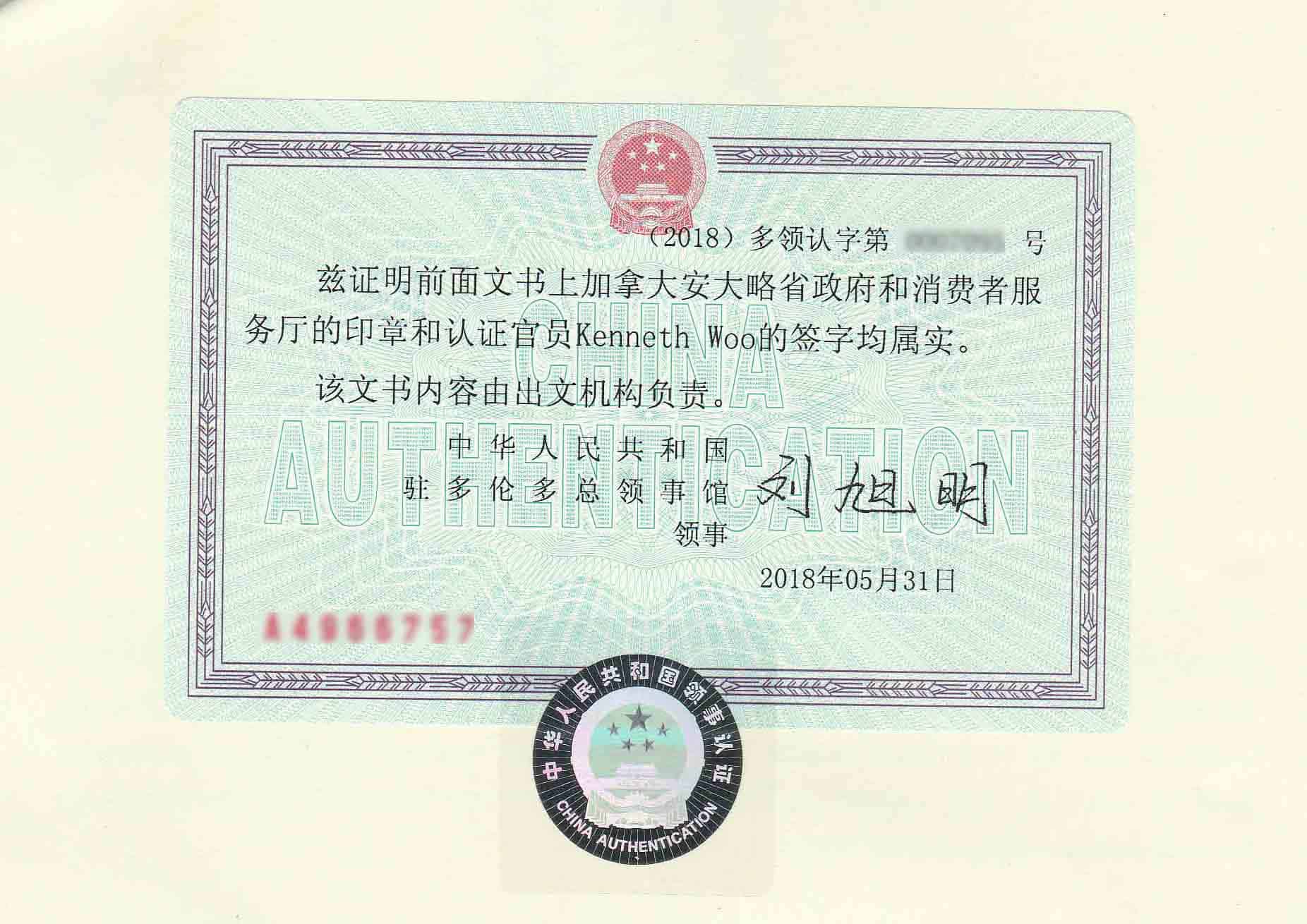
👉Step 3: Consular legalization by Vietnam embassy/consulate in China
In this case, you need to submit your document already authenticated by the China Ministry of Foreign Affairs to the embassy/consulate of Vietnam in China for legalization.
And then, in order to use in Vietnam, you need to have your legalized documents translated into Vietnam and verified it.
As mentioned in the first part of this post, this whole procedure of legalizing China documents for use in Vietnam is completely done in China, you are highly recommended to do it before departure for Vietnam.
6. Document Requirements and Preparation Checklist
Check the document before it enters any paid stage. A spelling mismatch or unsuitable copy discovered after Apostille can require a new notarial certificate and a second application.
Information to check before submission
- Full name in Chinese characters and romanized form, compared with the current passport.
- Date and place of birth where relevant.
- Document or certificate number.
- Issuing body, place of issue and administrative jurisdiction.
- Date of issue and any freshness rule set by the Vietnamese receiving authority.
- Signature, signer’s capacity, official seal or stamp.
- Whether the record is an original, certified copy, notarial certificate or private document.
- Language and the required Vietnamese translation/certification method.
- Physical condition, attachments, binding and legibility of all pages.
- The exact Vietnam purpose and name of the receiving authority.
7. Apostille and Document Legalization Support for Vietnam
Legalizing or apostilling China documents for use in Vietnam can be complicated if you haven’t done it before, especially since each jurisdiction has its own authority and rules. Our Vietnam consular legalization service can review the route before you spend money on the wrong notarization or authority. The useful starting package is a clear scan, exact issuing place, intended use, Vietnamese receiving authority and target date.
What we can help you with
- Initial screening of the issuing jurisdiction, document type and intended use in Vietnam.
- Confirming whether Apostille or full legalization applies to your specific document and jurisdiction.
- Arranging notarization where required.
- Submitting to the correct FAO, High Court Apostille Service Office, DSAJ, MFA, or Vietnam embassy/consulate.
- Arranging a certified Vietnamese translation.
- Tracking progress and delivering your documents to your address.
Popular documents, papers issued in China for our Vietnam conular legalization
|
✅Academic Documents |
✅Personal Documents |
✅Company Documents |
|
Degree certificates usually require legalization when applying for a work permit in Vietnam. |
Birth certificates, marriage certificates and criminal record checks to name but a few. You need to legalize them to apply for Vietnam temporary residence card. |
You need to provide evidence of the structure of your China-based company, then we can help you to legalize your incorporation certificates, share certificates, resolutions and more. |
Most orders are completed in approximately 15 CALENDAR DAYS under current circumstances. No original is required!
Our Vietnam Legalisation/Apostillisation Service fee for popular Chinese Documents:
|
Type |
Service fee (USD/stamp) |
Required documents | |||
|
1-2 stamps |
3-4 stamps |
From 5 stamps | |||
Hong Kong stamp | 155.9 | 152.0 | 148.1 | Scan of original documents | Issued by Hong Kong High Court |
China stamp | 340.5 | 285.2 | 285.2 | Scan of original documents | Issued by China MFA |
In case you have other types of documents, feel free to request a quote at [email protected] or (US)+1.341.999.4099 | (VN)+84.387.285.099 (WhatsApp available).
Insider tips that prevent avoidable rework
- Start with the receiving authority, not the stamp. Ask the Vietnamese agency for its exact document checklist before you order anything. Two offices may use the same diploma for different procedures but require different issue dates, copies or translations. A valid Apostille cannot fix a document that is substantively unsuitable.
- Treat place of issue as an operational field. “China” is not specific enough for processing. Mainland China, Hong Kong SAR and Macao SAR use different competent authorities. Record the exact issuer and city or region on the intake form so the case is routed correctly from the first review.
- Separate the underlying record from its notarial certificate. Some private letters or copies need notarization before they enter the Apostille route. Confirm which signature or certification the Apostille will authenticate. Otherwise, you may receive a valid Apostille attached to a certificate that the Vietnamese authority did not ask for.
- Check names across passports and records early. Romanization, spacing and name order can differ between Chinese records, passports and Vietnamese forms. Flag the mismatch before translation. The Apostille verifies the signature and seal; it does not reconcile inconsistent personal data across documents.
- Keep a verification pack. Save the application receipt, courier record, Apostille verification result, certified translation and a scan of the complete bound document. If the receiving officer questions the certificate, this pack makes it easier to show what was issued, by whom and when.
Frequently asked questions
Generally, no. If the China-issued document is a public document covered by the Apostille Convention and carries a valid Apostille from the competent authority, an additional Vietnamese embassy or consular legalization stamp is not required solely for authentication. You may still need a Vietnamese translation, certification of that translation and documents required for the underlying work, marriage, residence or business procedure.
The Ministry of Foreign Affairs of the People’s Republic of China is a competent authority, and authorized provincial, autonomous-region and municipal Foreign Affairs Offices may issue Apostilles for documents from their administrative areas. Choose the office based on where the document originated and confirm its current filing rules. The HCCH authority record links to the official list and Mainland China verification service.
No Vietnamese authority can issue the Apostille for a document originating in China. The certificate must come from the competent authority in the place of origin—Mainland China, Hong Kong SAR or Macao SAR. However, parts of the later workflow, such as Vietnamese translation, certification and submission to the receiving agency, may be completed in Vietnam when the relevant rules allow it.
Usually, yes when the receiving authority needs Vietnamese-language records. Apostille removes the additional consular-authentication step; it does not translate the document. Ask whether the translation must be notarized or certified and whether the Apostille page itself must also be translated. Specialized procedures may have their own rules, so follow the checklist issued by the authority handling your application.
They often can when issued or certified as public documents under the law of the place of origin. The exact preparation differs by document. A diploma may need a notarial or education-related certification; a police certificate may have a validity window; and a civil-status record may require a newly issued certified copy. Confirm the required version before requesting the Apostille.
There is no single figure that covers every case. Timing and cost depend on the issuing jurisdiction, whether notarization is needed, the number and type of documents, translation, certification and courier arrangements. Request a case-specific quotation and confirm whether originals are required. The quotation should identify each included step, exclusions, estimated working time and the date through which the terms remain valid.
Whether a China-related document needs an Apostille or full consular legalization for use in Vietnam depends entirely on where it was issued and what type of document it is. China documents generally qualify for the faster, single-step Apostille, and any document that isn’t a genuine public document, still need the traditional multi-step legalization process.
Either way, an Apostille or legalization stamp only confirms the document’s origin – it does not replace the certified Vietnamese translation or any additional requirements the receiving Vietnamese authority may have. If you’re unsure which route applies to your document, contact us by email or WhatsApp for a free document review before you start.
For a free case review, contact Vietnam-visa.com about your China document Apostille for Vietnam at [email protected] or (US)+1.341.999.4099 | (VN)+84.387.285.099 (WhatsApp available).


